Liberia Media Centre

Améliorer l'accès à l'oxygène médical au Libéria

Le manque d'accès continu à l'oxygène au Libéria a contribué à des décès évitables, un problème aggravé par la pandémie de COVID-19, lorsque la demande en oxygène médical a dépassé la capacité du pays. 

Pour trouver une solution à ce déficit, en 2022, les autorités sanitaires du pays, avec le financement de l'Union européenne, de l'USAID et du gouvernement allemand, et l’appui de l'Organisation mondiale de la Santé (OMS), ont installé deux nouvelles usines d'oxygène à adsorption par inversion de pression de nouvelle génération. 

L'une d'entre elles se trouve à la Star Base sur l'île de Bushrod à Monrovia et l'autre à l'hôpital gouvernemental du Libéria dans le comté de Bomi. Le pourcentage de centres de santé et d'hôpitaux fournissant de l'oxygène médical à l'échelle nationale est ainsi passé de 51 % en 2021 à 67 % en 2023.

date

Liberia scales up access to life-saving medical oxygen

A lack of uninterrupted access to oxygen in Liberia has contributed to preventable deaths, a problem amplified by the COVID-19 pandemic, when demand for medical oxygen surpassed the country’s capacity.

In a bid to address this deficit, in 2022, local health authorities, with funding from the European Union, USAID and the German government, and support from World Health Organization (WHO), established two new state-of-the-art pressure swing adsorption (PSA) oxygen plants.

One plant is at the Star Base on Bushrod Island in Monrovia, and the other at Liberia Government Hospital in Bomi County. 

This has seen the percentage of health centres and hospitals providing medical oxygen nationwide increase from 51% in 2021 to 67% in 2023.

date
World Blood Donor Day 2024 – 20 years of celebrating giving: thank you blood donors!

Today, 14 June, is World Blood Donor Day, with the theme “20 years of celebrating giving: thank you blood donors!”

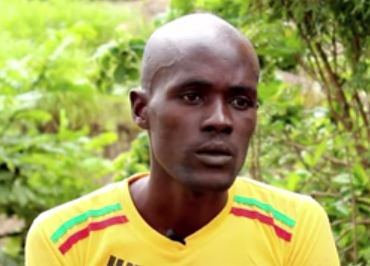
Thank you to blood donors like Alpha Tamba, who has been donating blood for over 20 years.

Tamba’s blood donation journey began in 2002, as a refugee residing in Kountaya camp in Guinea during the civil war in his home country Liberia, where he witnessed the devastating consequences of blood shortages.

Ever since, he has been a regular blood donor.

Alpha’s message is clear: blood donation is an act of love, kindness and sharing life.

date

Journée mondiale du donneur de sang 2024 - 20 ans de générosité : merci aux donneurs de sang !

Journée mondiale du donneur de sang 2024 - 20 ans de générosité : merci aux donneurs de sang !

Aujourd'hui, 14 juin, c'est la Journée mondiale du donneur de sang placée sous le thème « 20 ans de célébration du don de sang : merci à tous les donneurs de sang ! »

Merci aux donneurs de sang comme Alpha Tamba, qui fait ce geste depuis plus de 20 ans.

Alpha Tamba a commencé à donner de son sang en 2002, alors qu'il était réfugié dans le camp de Kountaya en Guinée, durant la guerre civile dans son pays natal, le Libéria, où il a été témoin des conséquences dévastatrices des pénuries de sang.

Il est depuis devenu un donneur régulier. Le message d'Alpha est clair : le don de sang est un acte d'amour, de bonté et de partage de la vie.

date

Testimony of Harrison Sakila, Ebola survivor in Liberia

Testimony_of_Harrison_Sakila_Ebola_survivor_in_Liberia.JPG

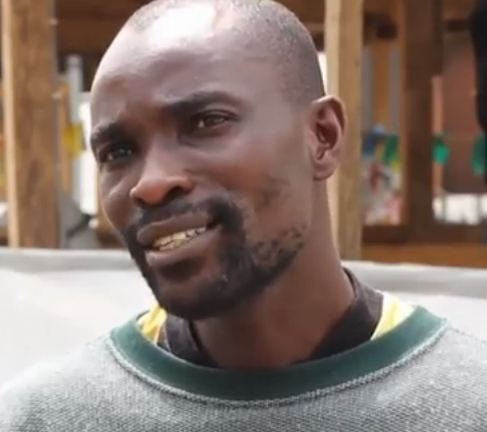
This testimony was recorded in Liberia on 17 July 2014 at Foya district's treatment centre. Harrison recounts that he contracted Ebola when he assisted her sick mother. A week after her death, he too got sick. Health staff of Samaritan’s Purse saw him and took him to the treatment centre. “I didn’t refuse, I joined them, they tested me – it was positive. They took me to the area of the treatment centre for confirmed cases. After one week, they came for my blood test, it was negative. I came out. I am alright.”

For health systems fighting the Ebola outbreak, it is important to identify survivors in order to record their experiences and support community awareness efforts by sharing their ordeals and how they managed to survive Ebola. It indeed helps to alleviate some resistance, panic, denial, and misconceptions that local populations often have about this disease.

WHO: Liberia - local students become active Ebola case finders

Liberia_-_local_students_become_active_Ebola_case_finders.JPG

Ever since the closure of the university due to the Ebola outbreak, Robbin George, criminology student at the University of Liberia, has been trying to help stop the spread of the Ebola virus in his country. He joined the team of active case finders to go from house to house to find out if sick people are being treated

WHO - Channelling hope – interview with psychosocial health worker E. Dash Karbar

WHO_-_Channelling_hope__interview_with_psychosocial_health_worker_E._Dash_Karbar.JPG

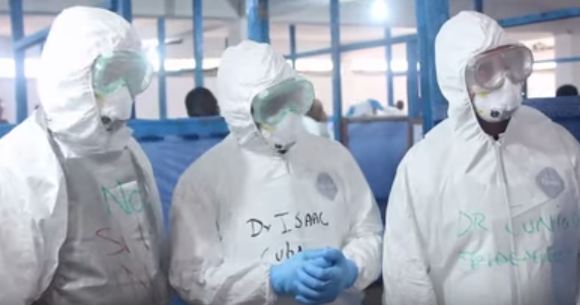
The Ebola outbreak in West Africa has produced increasing circles of victims beyond the infected and the dead. Survivors, families, children, and health workers are dealing with the stress and trauma left behind by the disease. Meet E. Dash Karbar Sr, a psychosocial worker working in Island Clinic Ebola Treatment Unit. Dash is one of the 57 mental health clinicians trained by WHO and the Ministry of Health and Social Welfare on how to support their fellow healthcare worker colleagues, how to support Ebola patients, and how to serve as a liaison between Ebola patients and their families and communities.

Testimony of Saah Tamba, Ebola survivor in Liberia

Testimony_of_Saah_Tamba_Ebola_survivor_in_Liberia.JPG

This testimony was recorded in Liberia on 17 July 2014 at Foya district's treatment centre. Saah Tamba from Lofa’s capital Voinjama lost five members of his family describes the ordeal he went through when he was sick of Ebola which he contracted from his uncle – the body pains, the chills due to high fever, vomiting and diarrhoea. He immediately went to the clinic and health staff brought him to the treatment centre in Foya. “When I got sick, my family doubted my recovery. The doctors who treated me gave me certificate that indicates I am free of Ebola, if anyone would still doubt. I am now free to go home, I am well and I am happy.”

For health systems fighting the Ebola outbreak, it is important to identify survivors in order to record their experiences and support community awareness efforts by sharing their ordeals and how they managed to survive Ebola. It indeed helps to alleviate some resistance, panic, denial, and misconceptions that local populations often have about this disease.